





















1. Home
  2. Construction Steel Toe Work Boots

Construction Steel Toe Work Boots

Explore construction steel toe work boots for jobs that call for protective footwear. Compare available options by fit and listed features, and check each pair’s safety specifications against your jobsite requirements before choosing.

Read More

Filter

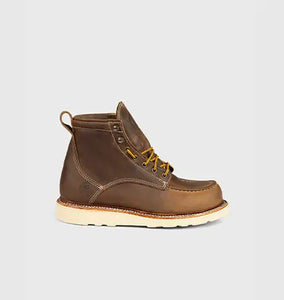
MAINE MOC STEEL TOE BOOT 8" - NATURAL WEDGE SOLE
Rating: 4.5365853 out of 5 stars, 41 reviews
$349 $349
Price $349
THE WILTON 8" STEEL TOE WORK BOOT - ALPHA
Rating: 3.7333333 out of 5 stars, 15 reviews
$339 $339
Price $339
THE WILTON 6" STEEL TOE WORK BOOT - ALPHA
Rating: 4.5 out of 5 stars, 12 reviews
$339 $339
Price $339
THE WILTON 6" STEEL TOE WORK BOOT - BIG LUG
Rating: 4 out of 5 stars, 7 reviews
$339 $339
Price $339
SALE THE WILTON 6" STEEL TOE WORK BOOT - NATURAL WEDGE SOLE - GRADED QUALITY
Rating: 5 out of 5 stars, 1 reviews
$339 $219
Sale price $219, was $339

Construction Steel Toe Work Boots

Construction steel toe work boots put protective footwear to work on demanding jobsites, where moving materials, handling tools, and working around heavy equipment make toe protection an important consideration. A steel safety toe provides reinforcement at the front of the boot, but the right choice depends on more than the toe cap alone. Required safety ratings, underfoot support, outsole design, and fit all matter when choosing footwear for construction work. Carpenters, concrete crews, equipment operators, and general contractors may face different conditions throughout a shift, from unfinished interiors to exposed outdoor sites. Match the boot’s documented protective features to your employer’s footwear requirements and the hazards of the job. Steel toe construction alone does not establish electrical hazard protection, puncture resistance, or suitability for every work environment; those features require their own stated ratings or specifications.

Fit and construction shape how work boots feel through hours of standing, walking, kneeling, and carrying loads. Look for enough room to move your toes without pressure against the steel cap, along with a secure heel and support through the midfoot. A protective toe cap will not stretch to accommodate a cramped fit, so choosing the right size and width matters from the start. Account for the work socks you normally wear and any insoles you use, since both affect the space inside the boot. When comparing product details, consider overall weight, flexibility, cushioning, and break-in expectations rather than treating a heavier build as an automatic sign of better performance. A boot that works well for extended time on concrete may feel different during frequent crouching or movement across uneven ground. The goal is a stable, comfortable fit that supports the work without adding unnecessary restriction.

Outsole design and weather protection deserve the same attention as toe protection. Traction needs vary across loose soil, gravel, wet surfaces, and smooth interior floors, and no outsole eliminates the risk of slipping. Check the stated outsole characteristics against the surfaces you encounter most often. For outdoor construction, compare any documented water-resistance or waterproofing features with your exposure to rain, mud, and standing water; for warm conditions, consider how the boot’s lining and construction may affect heat and moisture inside. Insulation can be useful in cold weather but may be unnecessary for indoor work or warmer seasons. Where details are available, materials, stitching, sole attachment, and care requirements also help clarify how a boot fits into your work routine. Choose construction steel toe work boots around verified protection, dependable fit, and the conditions of your actual workday—not appearance alone.

Read More